In May 2026, the median sale price for a Mercer Island home dropped 3.1 percent from the month before. Look at the same number against a year earlier, and it was up 4.7 percent. Nothing about buyer demand shifted that dramatically in thirty days, and nothing reversed itself in twelve months. What shifted was which twenty-six homes happened to close.
That is the thing about Mercer Island's housing market that most price guides skip past on their way to a headline number: the median here is not measuring the market the way it does in a market with volume. It is measuring whichever handful of transactions landed in the sample that month, and on an island with roughly 22,700 residents and a finite amount of land, that sample is small enough that a single high-end closing or a cluster of fixer sales can move the needle by a wide margin without any change in what buyers are actually willing to pay for comparable homes.
An Island Can't Add Inventory
Every real estate market responds to demand with some amount of new supply. Builders find lots, cities approve subdivisions, and eventually price pressure eases. Mercer Island doesn't have that release valve. The island is bounded on all sides by Lake Washington, and its zoning has stayed low-density for decades. When a home sells, it is competing against whatever else happens to be listed at that moment, not against a pipeline of future construction that might loosen things up.
That scarcity shows up directly in the numbers. In May 2026, the island saw 42 new listings against 54 homes for sale at month's end, with active inventory down 18.2 percent from a year earlier. Only 26 homes closed that month. Compare that to a market like Seattle proper, where thousands of homes change hands monthly and one unusual sale gets absorbed into the average without a trace. On Mercer Island, one unusual sale is a meaningful fraction of the entire month's data.
Three Products Are Hiding Inside One Number
The bigger issue isn't just sample size. It's that "Mercer Island home" doesn't describe one product. It describes at least three, and they don't trade the same way.
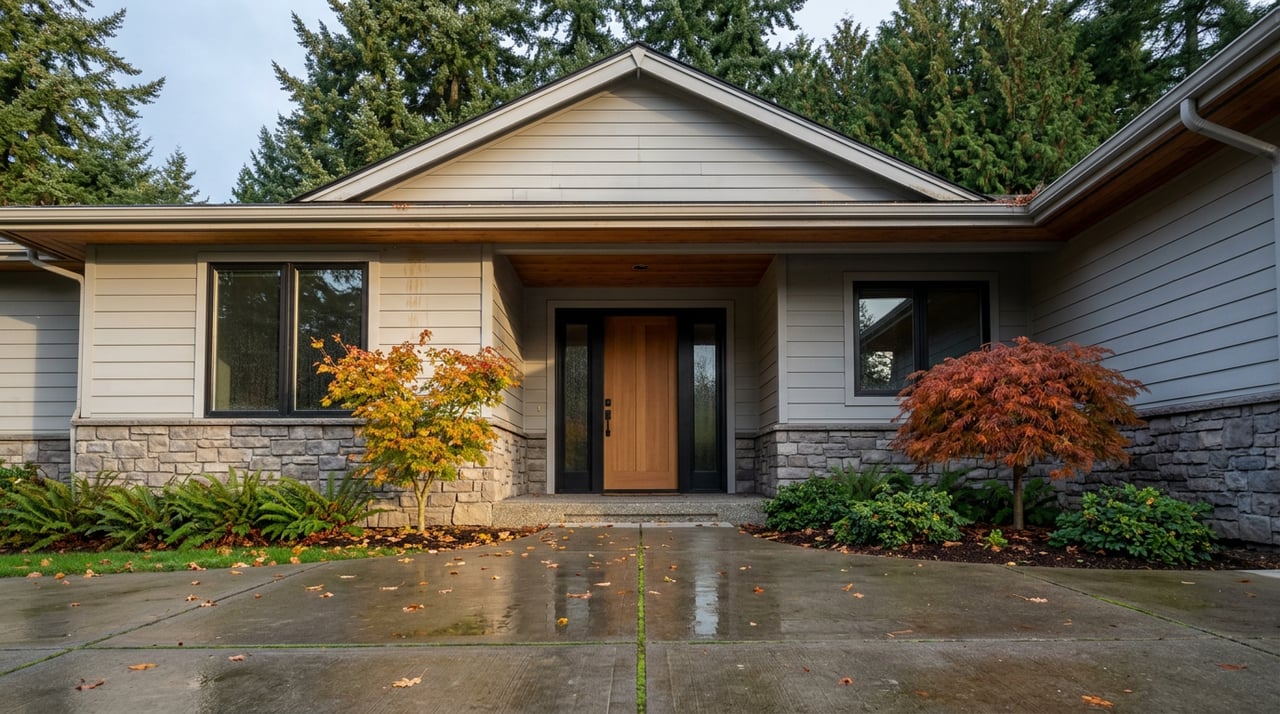
- Teardown lots. Older mid-century homes, ramblers and split-levels dating to the 1960s, that buyers purchase primarily for the land under them. Their value is tied to lot size, orientation, and buildability, not the structure sitting on top.
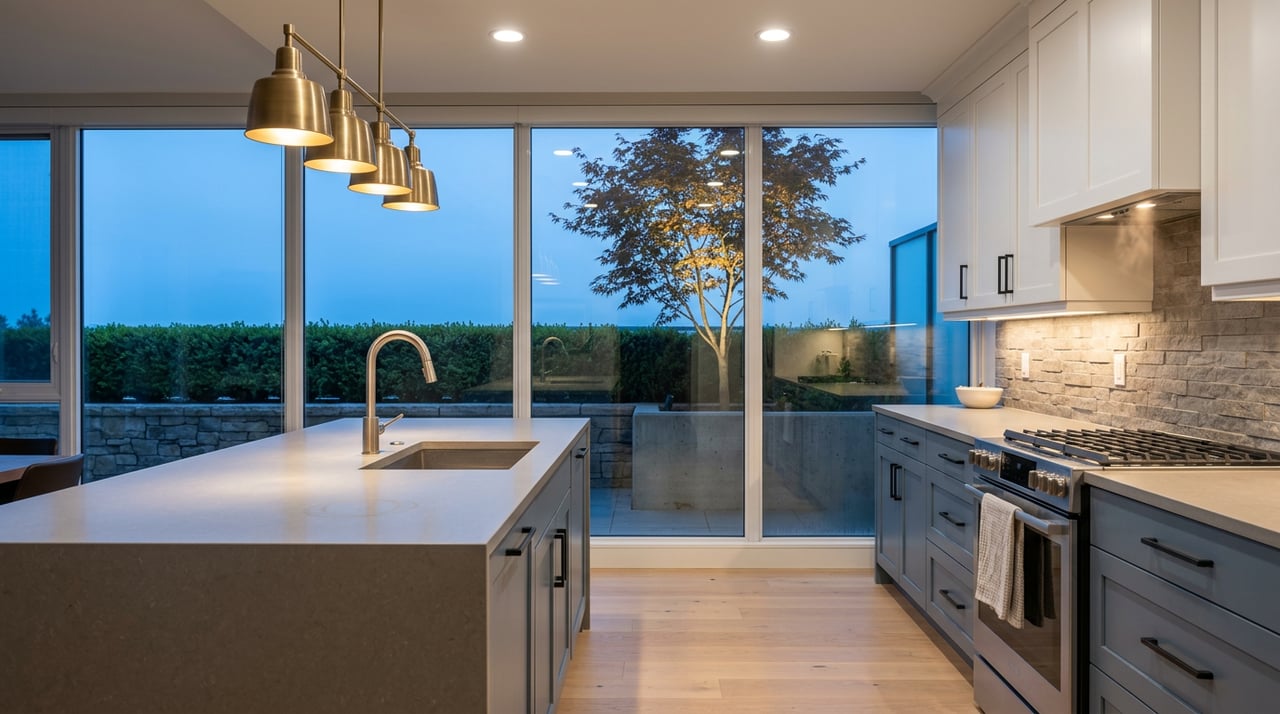
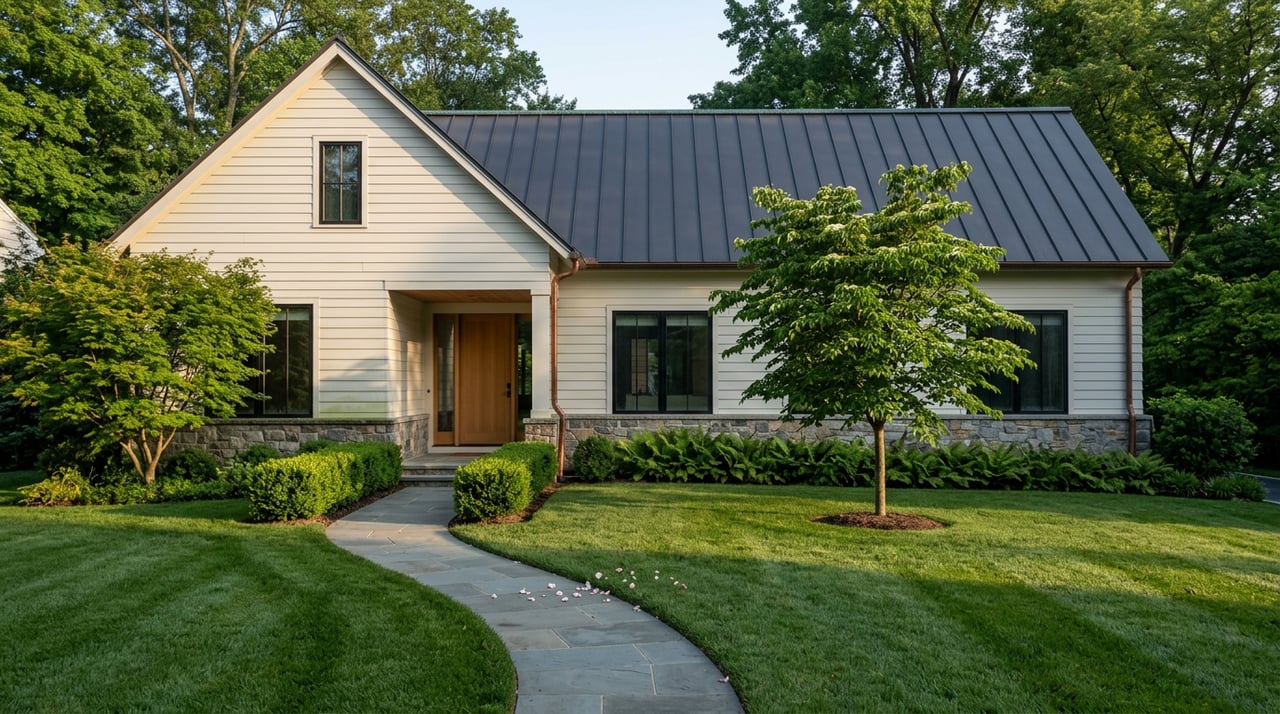
- Finished rebuilds and new construction. Homes built new or fully reconstructed on those same lots, often running $5 million to $12 million once complete, increasingly with amenities like saunas, home gyms, and dedicated outdoor living space built in as standard rather than upgrade.
- Waterfront estates. A permanently constrained tier with private dock access and unobstructed lake views, trading infrequently anywhere from $5 million to $20 million or more, where bulkhead condition and water rights matter as much as square footage.
A 1960s rambler and a 2026 modern build can sit on lots of identical size and still appeal to entirely different buyers making entirely different calculations. One buyer is pricing dirt and permitting potential. The other is pricing finished square footage, design, and move-in readiness. When a data provider blends both into a single median, the resulting number describes neither buyer's experience particularly well.
Custom-home builders active on the island see this daily. Construction costs for a ground-up build here typically run $500 to $900 per square foot depending on site complexity, with projects taking twelve to eighteen months from groundbreaking to move-in once permitting and design are finalized. Mercer Island's critical-area review process, covering slopes, shoreline rules, and tree retention, can extend that timeline further depending on the parcel. That cost and time structure is baked into how teardown lots get priced by anyone actually planning to build on them, which is a very different math than what a buyer touring a finished home is doing.
Why Three Sources Can Show Three Different Numbers in the Same Month
If you've searched around before writing this off as one blog's take, you've probably already noticed the medians don't agree with each other. That's not sloppiness on any single source's part. It's a function of what each one is actually measuring.
A three-month trailing figure blends quarters together and smooths out single-month noise, which is useful for spotting a trend but useless for knowing what a specific week's competition looks like. A same-month sold median captures only closings, which lag the market by the length of an average escrow. A same-month listed median captures asking prices, which reflect what sellers hope for rather than what buyers ultimately pay. None of these are wrong. They're answering different questions, and treating any one of them as the definitive number for the island is where sellers get their pricing strategy wrong before a listing ever goes live.
The Northwest Multiple Listing Service's annual review put the median closed-sale price for homes in the Mercer Island School District at $2,436,500 in 2024 and $2,500,000 in 2025. Portal snapshots taken at different points in 2026 have shown figures both above and below that range, depending on whether the snapshot captured a heavier month of waterfront closings or a heavier month of entry-tier condition sales. Neither reading is a correction to the other. They're two different months with two different product mixes.
What This Means If You're Pricing a Sale
The practical takeaway is that citywide medians are close to useless for pricing an individual Mercer Island home, and portal comparables that don't distinguish between teardown, rebuild, and waterfront tiers can lead a seller toward a number that has no relationship to what similar buyers are actually paying for a similar property.
The better approach is to find the three or four closed sales that match your home's actual category, not its zip code. A daylight rambler on a quarter-acre lot should be compared against other pre-renovation homes on similarly sized parcels, adjusted for lot characteristics like frontage and orientation, not against a modern rebuild two streets over that happens to share the same square footage. If your home includes shoreline features like a dock or bulkhead, those need their own line-item review, since water rights and structure condition can swing value by hundreds of thousands of dollars independent of the house itself.
Presentation still matters at every tier. Sellers on the island are currently realizing close to 98 percent of their original list price on average, which tells you that homes priced correctly for their actual category are moving close to ask. Homes priced off a blended median, in either direction, are the ones that sit.
What This Means If You're Buying
For buyers, the tight inventory numbers cut both ways. Fewer listings means less competition to sort through, but it also means less room for a "wait and see" approach. A home that fits your specific category, whether that's a finished move-in-ready build or a teardown lot you plan to develop, may not reappear for months once it's gone.
If you're weighing a finished new-construction purchase against buying a lot and building, know that both paths currently have real inventory. New-construction listings do come to market, sometimes from builders with decades of history on the island rather than out-of-area developers unfamiliar with the permitting environment here. American Classic Homes, headquartered on Mercer Island for more than thirty years, has listed finished new construction like its Oakmont floor plan alongside the custom teardown-and-rebuild work more common on the island. If you're leaning toward a teardown-and-build path instead, budget for the twelve-to-eighteen-month timeline and the per-square-foot range noted above before you fall in love with a specific lot, since the finished cost is what actually determines whether the purchase pencils out.
A Few Questions Worth Settling Early
Is Mercer Island currently a buyer's market or a seller's market? By the conventional months-of-supply rule of thumb, roughly 3.2 months of inventory in May 2026 reads as close to balanced. But that rule assumes a market where supply can expand to meet demand. On an island that cannot add land, a "balanced" reading still functions closer to a seller's market in practice, because the ceiling on new inventory is structural rather than cyclical.
Should I trust price-per-square-foot as a shortcut? Only within a matched category. A price-per-square-foot figure that blends teardown-condition homes with finished luxury rebuilds will understate what a comparable finished home is actually worth, and overstate what a comparable fixer is worth. Use it as a sanity check on top of direct comps, not as a substitute for them.
Why did days on market rise even though prices held up? A modest increase in average days on market, even in a market with price stability, often reflects the specific mix of what happened to list that month rather than a genuine cooling. A wider range of price points listed at once naturally produces a wider range of selling timelines.
If you're weighing a move onto Mercer Island, a sale of a home you've held for years, or a teardown lot you're trying to price honestly, the conversation is easier with someone who reads these numbers by category rather than by headline. That's the kind of groundwork Michael Fleming does before any pricing recommendation goes on paper. Let's Connect.